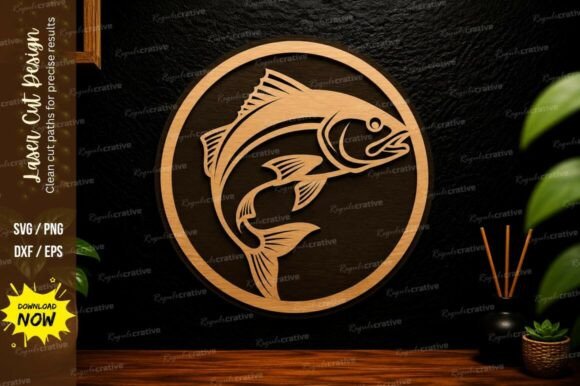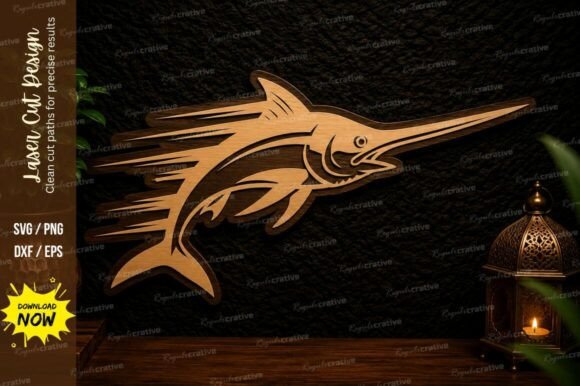
Marlin Fish Laser Cut SVG Design – A Premium Quality Guide for Flawless Results
Creating intricate and beautiful designs using laser cutting technology has become increasingly popular among crafters, designers, and hobbyists. One standout design in this space is the Marlin Fish Laser Cut SVG Design. This premium quality laser cutting file set is carefully prepared to ensure smooth and precise results across various materials. Whether you're a beginner or an experienced creator, understanding how to choose and use these files correctly can make all the difference in your final product.
What Is Marlin Fish Laser Cut SVG Design?
The Marlin Fish Laser Cut SVG Design is a professionally crafted vector graphic optimized for laser cutting and engraving. It's designed to represent the elegant form of a marlin fish, often used in home décor, signage, educational projects, and custom gifts. The design is scalable without loss of quality, making it suitable for both small personal crafts and large-scale production.
This package includes multiple file formats such as SVG, EPS, PNG, DXF, and PDF. These formats are essential because they allow compatibility with different types of laser cutting machines and design software like Adobe Illustrator, CorelDRAW, and Cricut Design Space. With an instant download and easy-to-use structure, the Marlin Fish design offers convenience and flexibility for a wide range of creative applications.
Common Mistakes When Choosing Laser Cutting Designs
Many users overlook important details when selecting laser cutting designs, especially if they're new to the process. Here are some common pitfalls:
- Ignoring format compatibility: Not all laser cutters accept every file type. If you don’t verify that your machine supports the included formats (like SVG or DXF), you may end up with unusable files.
- Using low-resolution images: Some people mistakenly use raster-based PNGs as their primary file for detailed cuts. However, for best results, always prioritize vector formats like SVG or EPS which maintain sharpness at any size.
- Assuming one-size-fits-all settings: Each material reacts differently to laser power and speed. Using default settings without adjusting them for your specific project can lead to burnt edges or incomplete cuts.
Why Format Matters
A key strength of the Marlin Fish Laser Cut SVG Design is its inclusion of multiple high-quality file formats. But knowing which to use is crucial. For example, SVG and EPS are ideal for editing and resizing in design software, while DXF is better suited for industrial-grade CNC machines. PNGs can be useful for visual previews but should not be used for actual cutting. Always double-check your machine’s supported formats before downloading any design package.
Misunderstandings About Scalability and Quality
One major misunderstanding is thinking that any digital image can be scaled for laser cutting without issues. In reality, only vector graphics maintain clarity and precision when resized. The Marlin Fish Laser Cut SVG Design avoids this problem by offering clean, scalable vectors that won’t pixelate or distort. However, improper scaling within the software—such as stretching instead of uniform resizing—can still cause problems.
Better approach: Use the native vector editor in your design software to scale the design proportionally. Avoid dragging corners to resize; instead, look for options like "Scale Proportionally" or use the bounding box handles equally.
Overlooking Material-Specific Considerations
Another frequent oversight is not tailoring the design to the material being used. While the Marlin Fish pattern is versatile and works well on wood, acrylic, metal, and paper, each requires different laser settings. Acrylic, for instance, tends to melt easily and needs lower power and faster speeds compared to wood, which may require more heat for complete cuts.
Tip: Always test your design on a scrap piece of your chosen material before committing to the full project. This helps you fine-tune the laser settings and ensures the Marlin Fish design comes out as intended—smooth, clean, and visually appealing.
Proper Software Integration: What You Need to Know
Having the right file doesn’t mean much if it doesn’t integrate well into your workflow. Many users download SVG files only to discover they don’t render properly in their preferred software. This can lead to frustration and wasted time.
To avoid this issue, confirm that the software you're using is compatible with the SVG, EPS, and DXF formats provided. For instance, Adobe Illustrator is excellent for tweaking vector paths, while Cricut machines rely heavily on SVG for accurate cutting. If you’re using a laser cutter with a built-in CAM system, the DXF file might be the most efficient option.
Realistic Example: Wood Signage Project
Say you want to create a wooden sign featuring a Marlin Fish design. You might start by downloading the SVG file, but if you skip checking the recommended laser parameters for basswood, you could end up with uneven cuts or warped pieces. Instead, review the suggested settings or conduct a trial run. The result? A professional-looking sign with crisp lines and no distortion.
How File Quality Impacts Your Final Product
Low-quality or poorly constructed vector files can cause misalignment, jagged edges, or failed cuts. That’s why it’s so important to invest in a premium design like the Marlin Fish Laser Cut SVG Design, which is created with attention to detail and technical accuracy.
Poorly nested elements or overlapping nodes can also slow down your laser cutter or lead to unnecessary material waste. The Marlin Fish design is structured to minimize these issues, ensuring smoother operation and higher efficiency.
What to Check Before Downloading
- Verify the resolution and scalability: Ensure the design is vector-based and allows for resizing without degradation.
- Confirm format availability: Make sure the package includes the formats you need for your specific laser cutter or software.
- Review the design layout: Look for clean lines, proper nesting, and minimal complexity unless it's part of the artistic intent.
- Check for user reviews or samples: High-quality laser cut designs often have testimonials or sample outputs from other users.
Maximizing Value and Satisfaction
Investing in a premium quality laser cutting design file set like the Marlin Fish SVG can save you time and money in the long run. Cheap or unverified designs may seem cost-effective initially but can lead to repeated failures, wasted materials, and lost productivity.
Here’s how to get the most out of your purchase:
- Use the correct file format for your machine.
- Adjust laser settings based on your material.
- Test the design on a sample piece first.
- Store the files in an organized folder for future use.
Case Study: Custom Aquarium Décor
An entrepreneur wanted to create a line of custom aquarium decorations featuring marine life. They chose the Marlin Fish Laser Cut SVG Design for its aesthetic appeal and technical precision. By using the DXF file with their industrial laser cutter and optimizing the settings for acrylic, they were able to produce hundreds of high-quality, consistent designs efficiently. The ability to reuse and modify the design helped them adapt quickly to customer preferences, boosting both sales and satisfaction.
Conclusion
When it comes to laser cutting projects, choosing the right design is half the battle. The Marlin Fish Laser Cut SVG Design stands out due to its premium quality, multi-format support, and precision. By avoiding common mistakes—like ignoring format compatibility, using incorrect settings, or failing to test—you can unlock the full potential of this design and achieve professional results every time.
Before purchasing, always consider your machine’s capabilities, the material you’ll be working with, and whether the design can be easily modified to suit your needs. Investing in a well-prepared design like the Marlin Fish SVG ensures not just better output, but also a more enjoyable and productive crafting experience.